


Our planetary futures. Gold Mercury's civilisational vision for humanity's long-horizon future
The future of humanity depends on our ability to design it deliberately — and to cultivate a shared planetary vision that fosters cooperation, synergy and alignment among global, regional and local actors across every boundary that divides us.
The choices being made today — by leaders, enterprises, nations and institutions — will determine which trajectory our civilisation follows in the age of artificial intelligence. This is not a prediction. It is a design problem. And Gold Mercury exists to help solve it.
Our Planetary Futures
3 techno-human trajectories in the age of AI
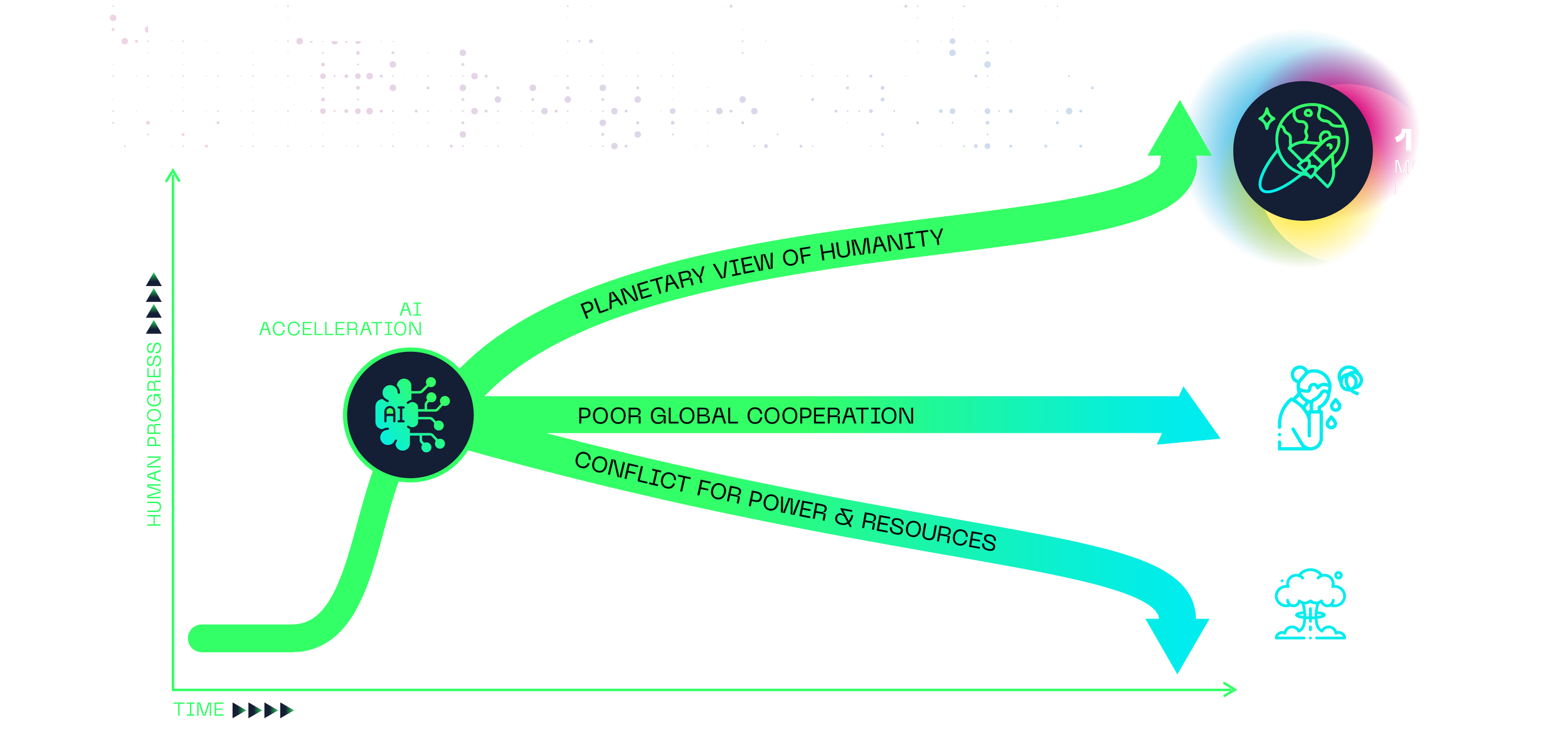
Three human trajectories in the age of AI
Where does humanity go from here? Gold Mercury has identified three possible trajectories — and only one leads to the future worth designing.
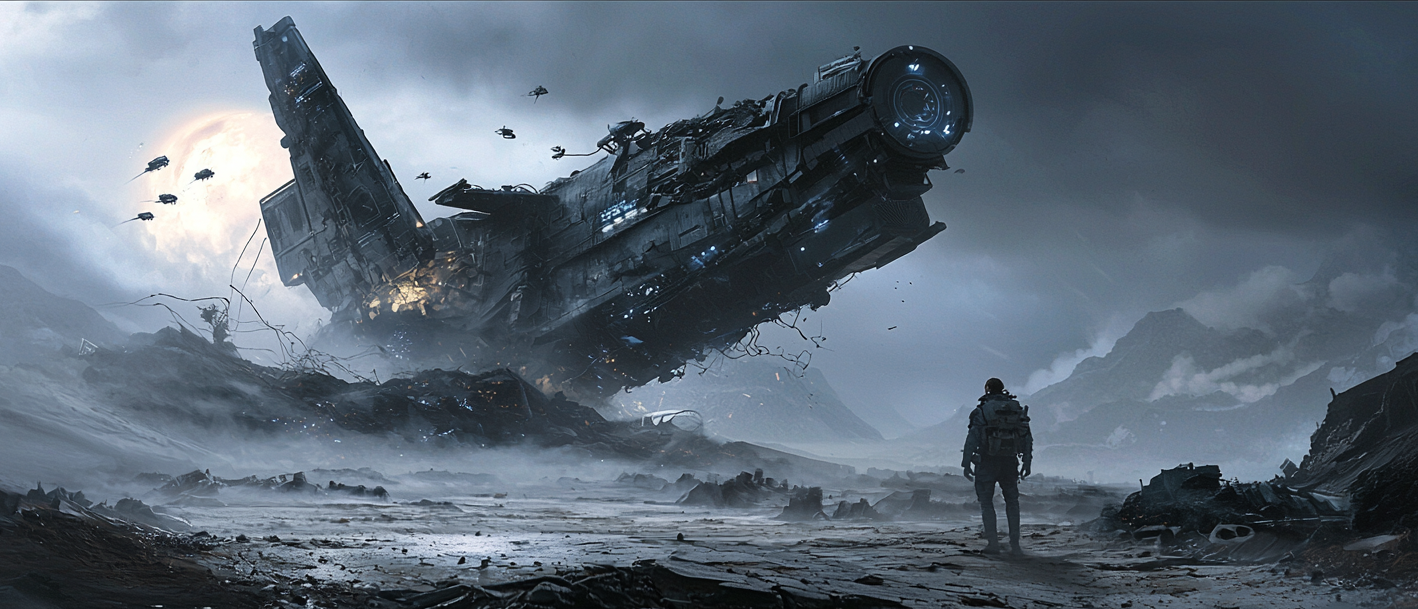

3. Self Destruction
The acceleration of AI and technological progress has deepened global divisions — of wealth, resources and ideals. Conflicts over territory, power, ideology and survival escalate, leading humanity toward potential collapse and extinction. Societies fracture under climate disasters, pandemics, economic instability and cyber warfare, creating fertile ground for extremism, organised crime and social collapse.
As this acceleration outpaces governance and ethics, systemic vulnerabilities magnify at civilisational scale. Humanity faces a world where cooperation is rare, competition is ruthless, and survival is uncertain. Without intervention — without vision, without Megavisionary guardians willing to design a different future — these pressures spiral toward civilisational collapse, as AI, weapons and human ambition combine in unforeseen and potentially catastrophic ways that no single nation or institution can contain alone.


2. Human Stagnation
AI and technology have become instruments of control rather than liberation. The world fractures into regional coalitions locked in strategic competition. Climate disruption, economic inequality, malicious AI, health crises and ongoing wars trap humanity in a cycle of maintenance and crisis management — governing the present rather than designing the future.
This fragile equilibrium cannot last indefinitely. It will either degrade into Trajectory 3 — Self Destruction — or evolve toward Trajectory 1 — Megavisionary Potential. Stagnation is not a destination. It is a crossroads — and the direction taken depends entirely on the quality of leadership, vision and planetary thinking available at the most consequential moment in human history.
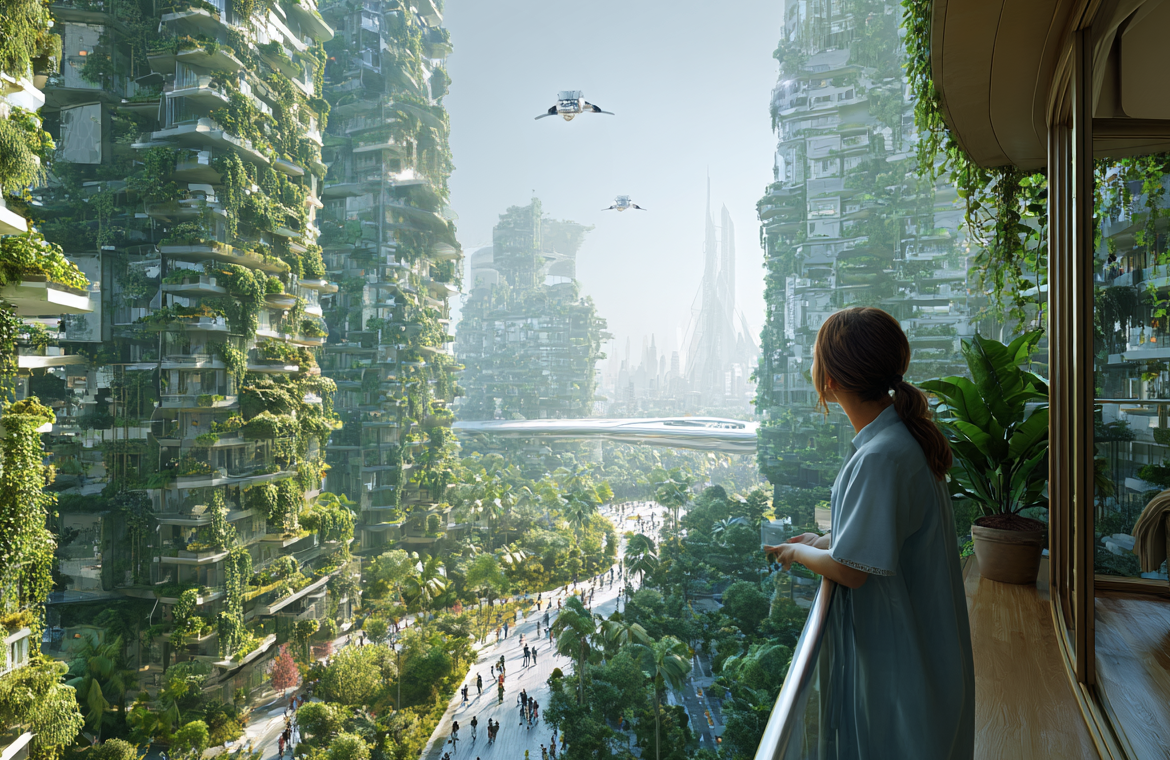

1. Megavisionary Potential
Humanity has learned to use AI safely, ethically and cooperatively. Together, we co-create a form of collective superintelligence that accelerates sustainable progress beyond anything previously achieved. Climate, energy, food, equality, justice, resources and health are managed in balance with the natural systems on which all life depends.
Our mastery of technology and global cooperation enables us to expand into space — ensuring the extension of human life and consciousness beyond Earth into the next great frontier of discovery, exploration and imagination.
This is the trajectory Gold Mercury was founded to advance. This is what Visionary Governance® makes possible. This is the future worth designing.
Our Planetary Futures Framework
Real examples and historical precedents of each type of co-existing trajectories and realities.
FRAGMENTED GLOBAL GOVERNANCE


-
•AI Weaponisation & Autonomous Warfare
•Cyberattacks & Global Cyber Warfare
•Failed States (Haiti, Somalia)
•Climate Disasters (Hurricanes, Wildfires, Floods)
•Religious and Ideological Conflicts
•Global Conflicts (WWI & WWII)
•Pandemics (COVID-19, Spanish Flu)
•Economic Shocks (2008 Financial Crisis)
•Financial Bailouts and Collapses
•Arms Races & Nuclear Tensions
•Genocide (Rwanda, Holocaust)
•Ethnic Cleansing
•Energy Crises (Oil Shocks)
•Cold War Rivalries
•Slavery & Human Trafficking
•Hyperinflation (Zimbabwe, Weimar Germany)
•Deflationary Crises (Japan 1990s)
•Organised Crime Networks
•International Terrorism
•Cataclysmic Events (Nuclear, Volcanic, Asteroids)
-
AI for Short-Term Gain, not Global Good
Poverty & Extreme Inequality
Hunger & Malnutrition
Regional Conflicts & Proxy Wars
Political Gridlock & Corruption
Climate Change Disruptions (Gradual)
Health Crises (Chronic Diseases, Antibiotic Resistance)
Malicious AI and Technology Misuse
Stalled Economic Growth
Global Migration Crises
Education Gaps & Knowledge Divide
Resource Scarcity
Infrastructure Decay
Technological Adoption without Transformation
Urban Overcrowding
Regional Isolation & Protectionism
Slow Progress in Social Justice
Limited Space Exploration
-
AI for Sustainability, Health, Science, and Education
Renewable Energy Revolution (Solar, Wind, Fusion)
Climate Restoration Technologies
Biotechnology & Gene Editing for Health
Cooperative Global Governance Models
Fusion of Human Creativity with Superintelligent Systems
Protection of Human Rights
Microfinance & Microlending Innovations
UN Sustainable Development Goals
Civil Rights Movements & Social Justice Advances
Regional cooperation (European Union)
Global Health Initiatives & Vaccine Access
Peaceful Diplomacy & Conflict Resolution
Advanced Space Exploration & Colonisation
Terraforming & Planetary Engineering Concepts
Biomimicry & Nature-Inspired Technology
Global Internet & Knowledge Access
Circular Economy & Zero-Waste Systems

COOPERATIVE GLOBAL GOVERNANCE
How to achieve our Megavisionary Potential for planetary cooperation
The Planetary Futures Framework explores two contrasting models for the evolution of global governance on Earth and beyond.
Planetary futures in the age of AI - Two Models
Model 1 - FRAGMENTED AND UNSUSTAINABLE
AI for short-term gain. Fragmented Global Governance. Non-Cooperative Model.
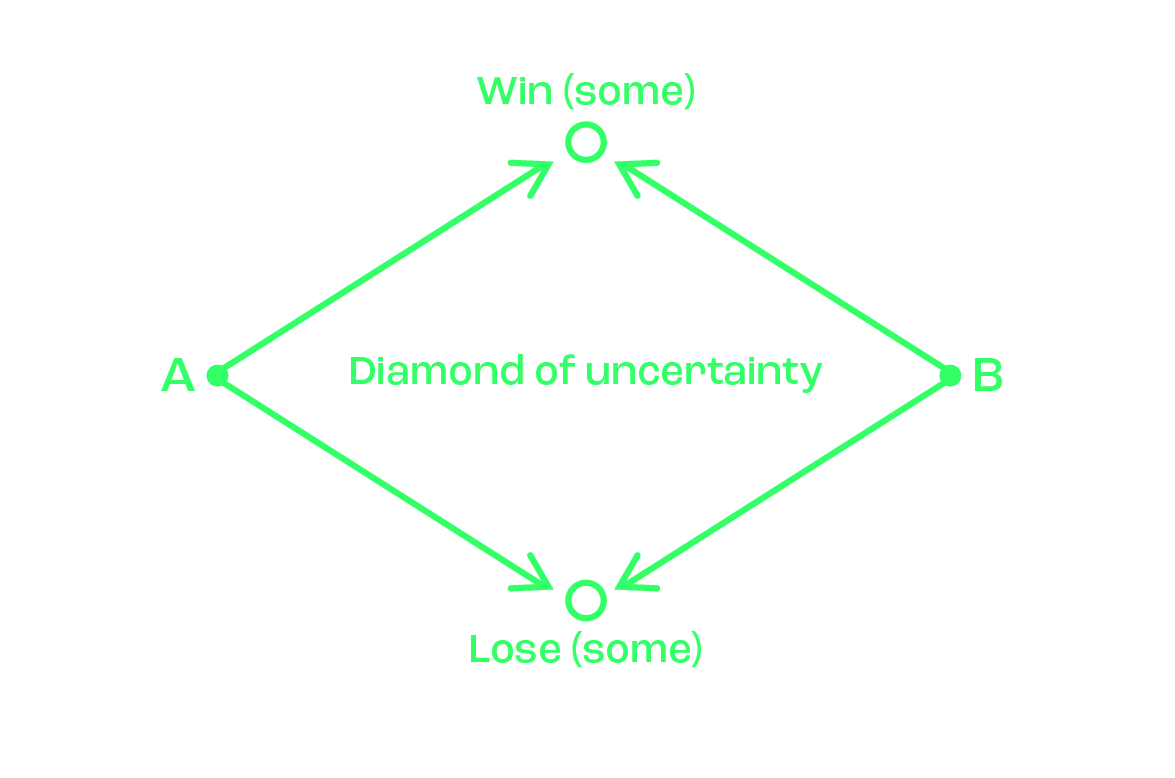
This model operates from a short-term, competitive mindset. Nations and blocs view progress as a zero-sum game — some win, some lose. Technological power is hoarded rather than shared. Governance lags behind innovation. The planetary challenges that require collective action — climate, health, security, inequality — go unresolved because no cooperative framework exists to address them at the scale they demand. This fragmented approach perpetuates instability and limits humanity’s capacity to address shared existential challenges.
No common future
Shortsightedness
Perception equals reality
Overcoming challenges
Exclusion of alternative options
Model 2 - COOPERATIVE AND PLANETARY
AI for human progress. Cooperative Global Governance. The Planetary Futures Model. Sustainable.
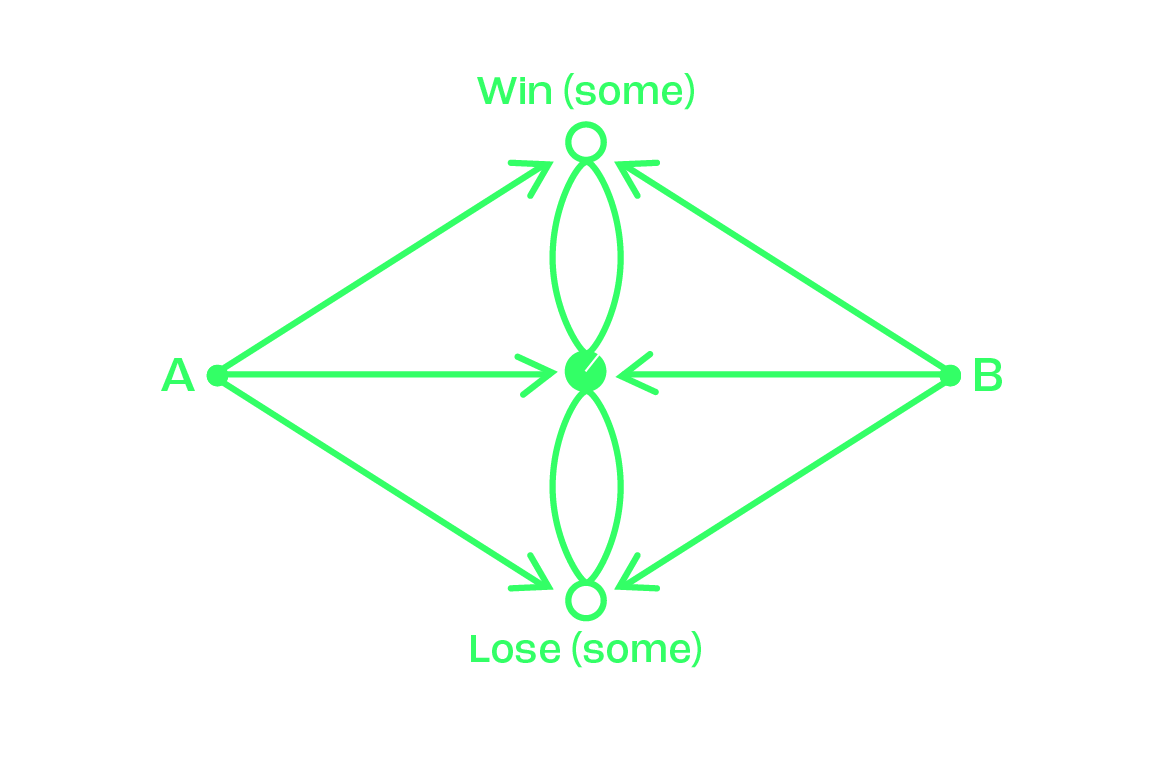
This model envisions humanity’s future as a shared destiny. It calls for a long-term, collaborative framework where nations, organisations, and individuals align their visions around planetary and human well-being. Through cooperative Visionary Governance®, humanity achieves enduring peace, sustainable prosperity and a thriving coexistence with the natural world. Technology serves humanity. Governance serves the future. And the future — designed deliberately by Megavisionary guardians — becomes a place worth inheriting.

Management of diverse alternatives
Megavisionary foresight
Fully aware of total picture
Engineering joint solutions
One shared planetary future